

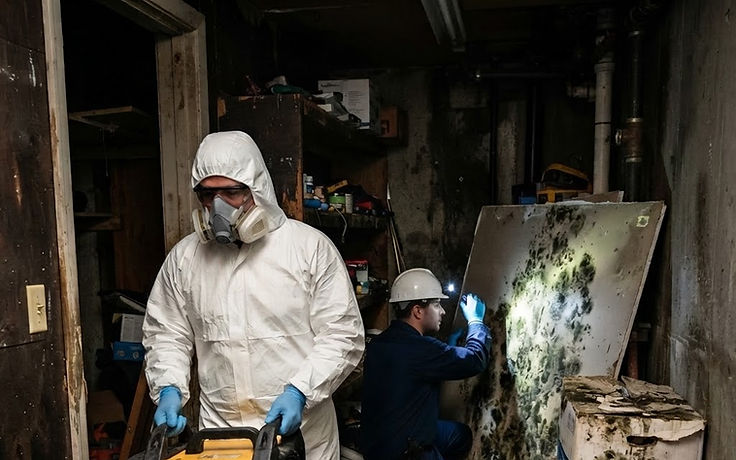
Closets and storage rooms are where mold wins first, and the reason is arithmetic. A closet on an exterior wall has one cold surface, almost no air exchange, and usually no heating vent. Stack boxes against the cold wall and you have created a still pocket of air at high humidity, which is the entire recipe.
What a renter should document
Photograph the growth with something for scale, note the date, and photograph the back of any furniture or box that was against the wall. Report it in writing to the property manager. In Washington, the landlord is responsible for the structure and the moisture source, and the tenant is responsible for reporting promptly. A written report protects both.
Cleaning versus remediating
- Small surface growth on a non-porous surface can be cleaned and the cause corrected.
- Growth on drywall paper or wood means the material is affected and, in most cases, needs removal.
- Growth that returns within weeks means the moisture source was never fixed.
- Any growth in a bedroom or living space warrants a proper assessment, not a spray bottle.
The smallest room with the worst airflow
A closet has no supply register, no return, and a door that stays shut. Whatever humidity enters it stays there until the door opens. In a Seattle apartment that means the closet on the cold exterior wall, the one behind the bathroom, and the storage room on the north side of the building are the three spots that grow first. A single wet coat hung inside is enough to raise the humidity in a 4 by 6 space for days.
The usual culprits are unvented dryers in unit laundry closets, damp outerwear, cardboard boxes that hold moisture against the wall, and shoes stored against an exterior wall where the surface is coldest. Growth starts on the wall behind the storage, which is why the smell arrives before anything visible does.
What to do about it in a rental
- Photograph the growth and the conditions, then notify the landlord in writing the same day. In Washington the notice matters for liability.
- Empty the closet completely and dry every item outside the room.
- Wipe hard surfaces with a damp cloth and detergent, then dry with a fan. Do not dry-brush, which aerosolizes spores.
- Keep the door open for a week with a small fan running, and stop storing anything against the exterior wall.
- Do not paint over it. A landlord repair that is paint only will fail again, and the record should show the recurrence.
Is it the tenant’s fault?
Usually the answer is neither party, and that is what makes these disputes long. Storing boxes against a cold wall is normal behaviour; a wall that stays below the dew point all winter is a building failure. A moisture reading on the wall, taken behind the furniture, is what separates the two.
What does remediation involve in an apartment?
Containment with negative air so the unit stays habitable, HEPA vacuuming of all surfaces, treatment of the affected wall and contents, then drying with the source corrected. It is usually a one-day job, and the building then needs to address the humidity path or it happens in the next unit.
What the fix looks like in a building, not just a unit
Closet growth on an exterior wall is usually a symptom of the envelope, and a building-level fix looks different from a unit-level cleanup. It means looking at the wall assembly, the insulation and the vapor strategy, and often at the ventilation in the corridor and the unit. In a mid-century Seattle apartment building the walls were built for a drier climate, and the interior surfaces now sit below the dew point for a large part of the winter.
The practical options are additive rather than structural most of the time: a small dehumidifier in the affected room, ventilation through the closet door with a louvre or an undercut, storage moved off the cold wall, and a vapor-retarding paint on the interior face. On a building where several units report the same closet, the answer is mechanical ventilation for the unit, which is a property decision and worth putting in writing to the landlord.
What does not work is sealing the closet. An airtight closet with damp contents and no air movement is a growth chamber. Air exchange is the mechanism, not the enemy.
What to throw away and what to clean
Cardboard boxes, paper goods, fabric that has visible growth, and anything with a fibre core that stayed damp comes out. Hard goods, metals, glass, plastics and solid wood can be wiped with detergent and dried, and they are usually fine. Shoes and leather are the middle case: cleanable if the growth is on the surface, and a loss if the leather itself has gone soft.
Photograph everything before it goes in a bag, including the inside of the boxes that are being thrown out. In a rental dispute, that photo set is the difference between a deposit returned and a deposit argued over, and it takes ten minutes.
We handle closet and unit assessments for owners and property managers across Seattle: 425 390 5911.
- Mold
- Closets
- Seattle
- Renters

