
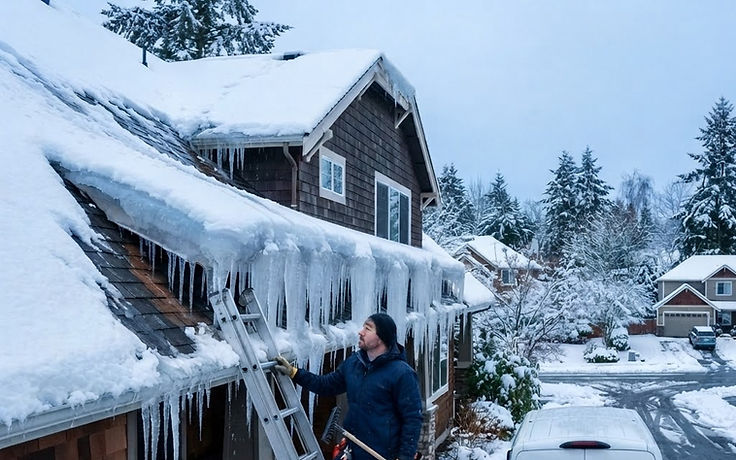
An ice dam forms when the roof deck is warm enough to melt snow but the eave is cold enough to refreeze it. Water pools behind the ice, backs up under the shingles and runs into the attic, the insulation and eventually the ceiling. The cause is heat escaping your house, not the weather.
Why it happens here now
Our snow events are usually short and wet, which is actually the worst combination: heavy, water-rich snow that insulates the roof, followed by a hard freeze at night. Most Puget Sound roofs were built for rain, so attic insulation and air sealing are often not up to a snow load.
Four things that stop it
- 1Air seal the ceiling plane. Recessed lights, top plates and chases are where the heat is going. This is the actual fix.
- 2Insulate to code and keep it clear of the soffit. Blocked intake vents turn an attic into a warm box.
- 3Rake the first two feet of snow after a heavy fall. A roof rake from the ground costs nothing and removes the fuel.
- 4Clear the gutters before the first freeze, so melt water has somewhere to go instead of refreezing in the trough.
If water is already coming in
Get a bucket under it, photograph it, and call. The interior damage is what an insurance claim covers; the ice dam itself is usually considered maintenance. We document the entry point carefully, because that distinction decides the claim.
Why it happens here now
An ice dam needs three things: snow on the roof, an attic warm enough to melt its underside, and an eave cold enough to refreeze the meltwater. Puget Sound roofs were built for rain, with generous venting and insulation values that were adequate for 35 degree winters. During the cold snaps of the last decade, snow has sat on roofs for days while the attic stayed above freezing, and the meltwater has run down to the overhang and refrozen at the gutter line.
Once a dam forms, the water behind it has nowhere to go but up and under the shingles. It enters at the eave, runs along the underlayment, and shows up as a stain on the ceiling near an exterior wall, which is the opposite of most roof leaks.
Four things that actually stop it
- 1Air seal the ceiling plane, so warm indoor air stops leaking into the attic through cans, top plates and chases.
- 2Insulate to code and keep the insulation clear of the soffit vents with baffles.
- 3Maintain a continuous air path from soffit to ridge, so the deck stays close to outdoor temperature.
- 4Make sure the eave has an ice and water shield underlayment if the roof is ever replaced, which buys time when a dam still forms.
Water is already coming in. What now?
Get the interior protected first: buckets, towels, and a photo of the stain. Then remove snow from the lower three feet of roof with a roof rake from the ground, never by climbing on a snow-covered roof. If the ceiling is bulging, clear the room and call us, because a saturated plaster ceiling releases without warning.
Is an ice dam covered by insurance?
Often yes for the interior water damage, and usually not for the roof repair itself, which is treated as maintenance. The distinction rests on documentation showing the damage came from the weight of ice and the sudden release of water, not from a long-neglected roof.
What an ice dam costs, and where the money actually goes
The interior repair from a moderate ice dam usually runs 1,500 to 5,000 dollars: a section of insulation, a ceiling patch, paint, and drying. The expensive version happens when the water has been entering for weeks, because then the wall assembly below the eave is wet, the exterior paint is failing, and the repair includes sheathing. Those jobs land in the tens of thousands and they take a month.
The prevention spend is not comparable. Air sealing an attic ceiling plane and topping up insulation typically runs 2,000 to 4,500 dollars on a Puget Sound house, and it also lowers the heating bill. On a house that has had one ice dam, that is usually the right next dollar spent, ahead of any exterior product.
And on the day of the event, the money goes to the interior first. Protecting what is under the ceiling and documenting it is what makes the claim straightforward. Roof work on a snow-covered roof in freezing conditions is how a repair turns into an injury.
Winter water response in Everett and across Snohomish County: 425 390 5911.
- Prevention
- Winter
- Roof
- Snohomish County

